Bringing Sphagnum austinii back to Kingsdale Head
We have over 400 hectares of blanket bog and peatland habitats at Kingsdale Head and huge potential for greater diversity in these recovering peatlands. Healthy blanket bog isn’t flat it has it’s own structure that forms a subtle but patterned and undulating landscape.
The variety of pools, hummocks, and lawns formed by a healthy range of vegetation creates resilience. It holds water, slows flow, and supports insects and waders. It shapes how peat forms and how carbon stays locked in the ground.
Sphagnum mosses are a particularly important part of this process. There are around 30 species in the UK with a range of colours, structures and functions adding up to diverse bog communities and a range of niches more resilient to changing conditions and climate.
Past drainage means Kingsdale Head, like many upland blanket bogs, is missing so much of this diversity and structure
We’ve begun an exciting experiment on the restored blanket bog at Kingsdale Head reintroducing Sphagnum austinii, a moss that once played an important role in peat formation across the uplands but is no longer present in Yorkshire. It died out during the industrial revolution, so appears to be very sensitive to pollutants. It’s a slow growing, chunky, hummock forming species with the potential to be an important part of a healthy blanket bog community.
With financial support from Rewilding Britain and the Yorkshire Dales Millennium Trust, we converted one of our redundant farm buildings into a light, sheltered growing space and covered other costs of the project. With Yorkshire Peat Partnership (YPP) we have collaborated in planning the re-introduction and ongoing monitoring. Over the past two years, this former barn has become a small nursery where we’ve been propagating a range of sphagnum species and other upland plants for reintroduction across Kingsdale Head, including our first batches of Sphagnum austinii.
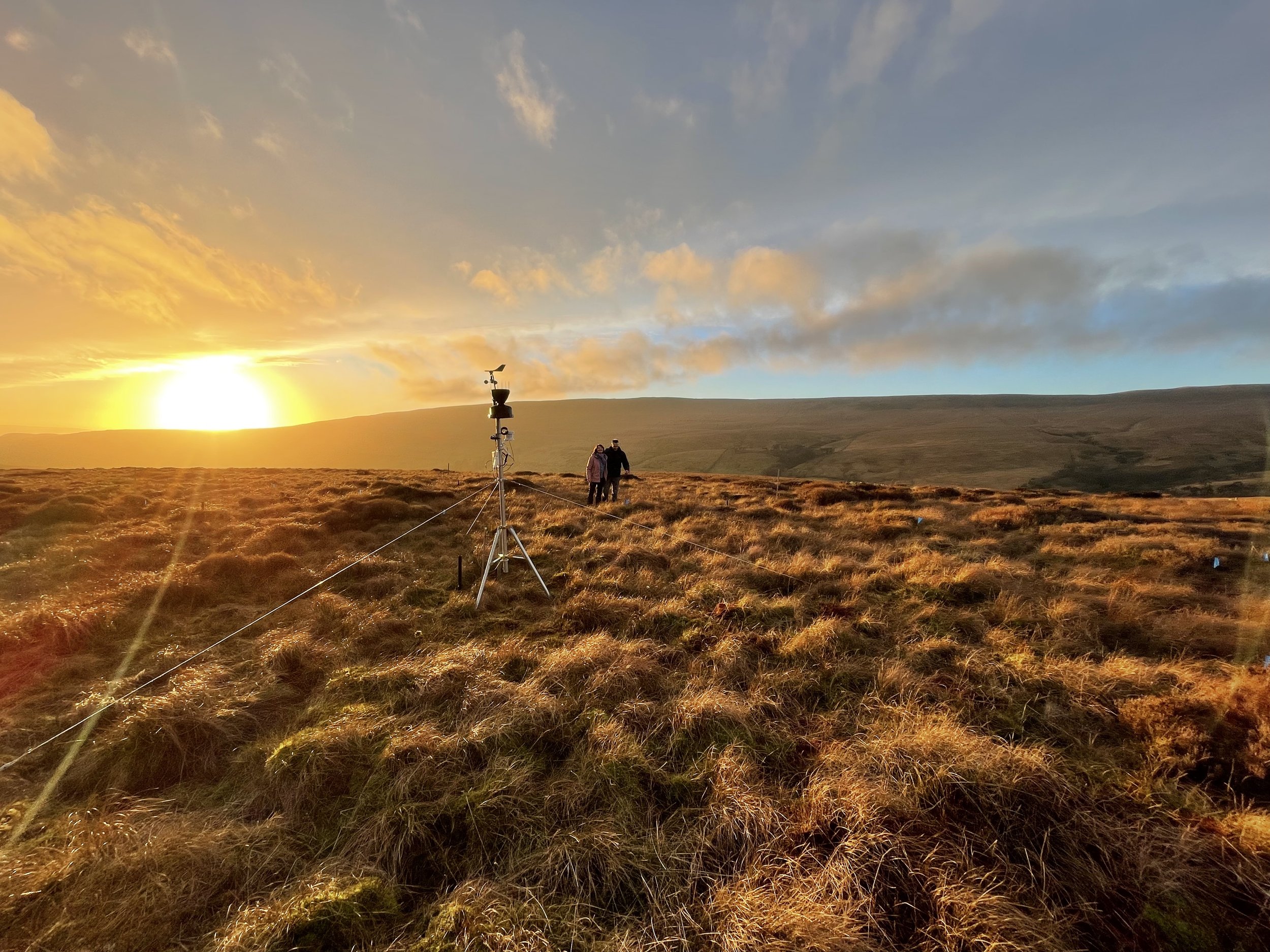
Now that the moss has grown well in the nursery, we’ve planted our initial trial patches out on the restored bog. The aim is to understand how austinii responds to the site and where it establishes best, how it behaves in different conditions, and whether it can once again contribute to the natural structure and function of a healthy blanket bog. We are working closely with YPP on the monitoring process as this re-introduction could lead to further re introductions across the north of England.
It’s an experiment with some careful observation and a genuine interest in learning how this once lost species might fit back into the landscape. With the bog now wetter and recovering well, it’s a good opportunity to see whether Sphagnum austinii can make a return to Kingsdale Head